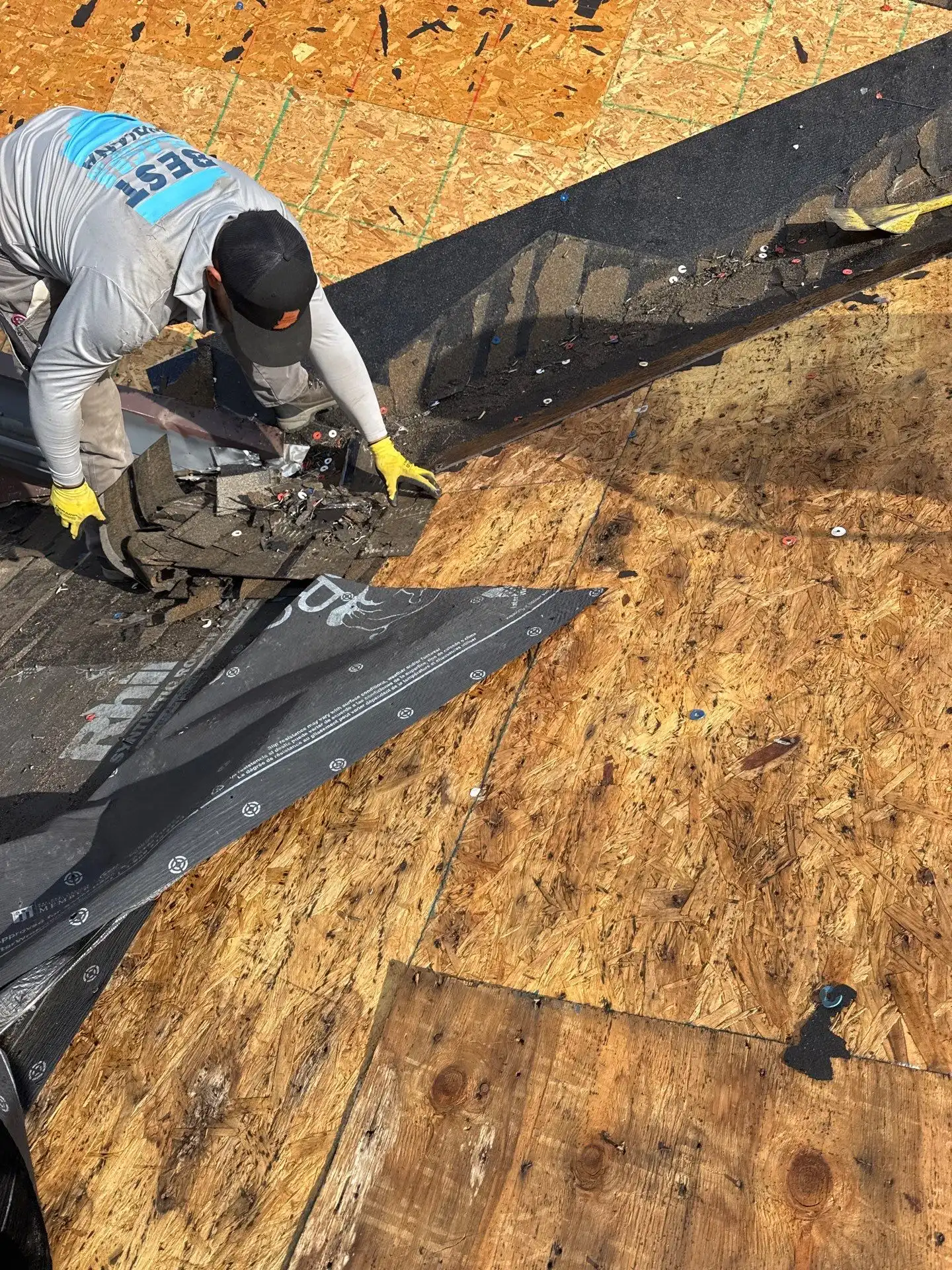
Signs you can see on the roof surface
The roof surface itself is the first place a failing commercial roof shows its age, and several visible conditions on a Nappanee roof point toward replacement rather than repair. Walking the roof, or having it walked, reveals most of them.
Widespread membrane deterioration
A membrane that is cracking, splitting, blistering, or worn through to its reinforcement across the roof, not just in one spot, is a strong replacement signal. Isolated damage can be repaired, but widespread deterioration means the membrane has reached the end of its service life, and patching it just chases failures around the roof. On a Elkhart County building, broad surface breakdown is one of the clearest signs the roof needs replacing rather than another repair.
Failing seams
Seams are where most commercial roofs leak, and seams that are opening, lifting, or separating across the roof indicate the system is failing at its weakest points. A few bad seams can be repaired, but seams giving way throughout the roof signal broad failure. When the seams on your roof are no longer holding, the roof is telling you it is near the end.
Ponding water
Water that stands on the roof for days after rain stresses the membrane and accelerates its breakdown, and chronic ponding across a roof is both a cause and a sign of a failing system. While drainage can sometimes be corrected, persistent ponding on an aging Nappanee roof often accompanies the deterioration that points to replacement. Standing water that never seems to clear is worth taking seriously.
Blisters, ridges, and surface irregularities
Blisters where the membrane has lifted, ridges, and an uneven surface can indicate trapped moisture or failing adhesion beneath the membrane. Scattered minor blisters may be manageable, but widespread surface irregularities suggest the system is breaking down or holding moisture, which points toward replacement on a Elkhart County roof. These irregularities are easy to see once you are on the roof and worth noting.
What the surface signs add up to
One surface sign in isolation may call for a repair, but several together, widespread deterioration, failing seams, chronic ponding, and surface irregularities, make a strong case that the roof has reached replacement. The surface is where the roof's overall health shows most plainly, and a roof showing multiple advanced surface signs is usually past the point where repairs are worth the money on your Nappanee building.
Get the surface signs assessed
The underlying lesson is that a commercial roof rewards attention, because the owners who catch the signs early are the ones who control the timing and the cost. A Nappanee building owner who treats roof signs as prompts to investigate, rather than as nuisances to patch over, ends up replacing on a planned schedule with competitive quotes and minimal disruption. The owners who ignore the signs until the roof forces the issue pay more and scramble, which is the outcome that reading the signs in time is meant to prevent.
Finally, the signs are only the prompt, and the real verdict comes from looking under the membrane, because the conditions that decide repair versus replacement live where the surface cannot show them. A owner who confirms the signs with core samples and a moisture scan acts on facts rather than appearances, which protects against both over repairing a roof that is done and over replacing one that still has life. That confirmation step is what turns a set of warning signs into a confident, correct decision about the roof.
It also helps to keep the whole picture in view rather than reacting to a single sign. One leak or one stain is worth investigating, but the strongest read comes from the pattern, how many signs are present, how severe they are, and whether they are spreading. A Elkhart County owner who steps back and weighs the accumulation makes a better repair or replace decision than one reacting to each individual problem in isolation, which is why a comprehensive inspection beats a series of quick patches.
The underlying lesson is that a commercial roof rewards attention, because the owners who catch the signs early are the ones who control the timing and the cost. A Nappanee building owner who treats roof signs as prompts to investigate, rather than as nuisances to patch over, ends up replacing on a planned schedule with competitive quotes and minimal disruption. The owners who ignore the signs until the roof forces the issue pay more and scramble, which is the outcome that reading the signs in time is meant to prevent.
Finally, the signs are only the prompt, and the real verdict comes from looking under the membrane, because the conditions that decide repair versus replacement live where the surface cannot show them. A owner who confirms the signs with core samples and a moisture scan acts on facts rather than appearances, which protects against both over repairing a roof that is done and over replacing one that still has life. That confirmation step is what turns a set of warning signs into a confident, correct decision about the roof.
It also helps to keep the whole picture in view rather than reacting to a single sign. One leak or one stain is worth investigating, but the strongest read comes from the pattern, how many signs are present, how severe they are, and whether they are spreading. A Elkhart County owner who steps back and weighs the accumulation makes a better repair or replace decision than one reacting to each individual problem in isolation, which is why a comprehensive inspection beats a series of quick patches.
The underlying lesson is that a commercial roof rewards attention, because the owners who catch the signs early are the ones who control the timing and the cost. A Nappanee building owner who treats roof signs as prompts to investigate, rather than as nuisances to patch over, ends up replacing on a planned schedule with competitive quotes and minimal disruption. The owners who ignore the signs until the roof forces the issue pay more and scramble, which is the outcome that reading the signs in time is meant to prevent.
Finally, the signs are only the prompt, and the real verdict comes from looking under the membrane, because the conditions that decide repair versus replacement live where the surface cannot show them. A owner who confirms the signs with core samples and a moisture scan acts on facts rather than appearances, which protects against both over repairing a roof that is done and over replacing one that still has life. That confirmation step is what turns a set of warning signs into a confident, correct decision about the roof.
Surface signs point the direction, but a professional assessment confirms whether they mean replacement or still allow repair, and core samples reveal what the surface alone cannot. Nappanee Commercial Roofing inspects the surface and pulls core samples on your Nappanee roof, then tells you honestly whether repair or replacement is the right call. Call (765) 676-3491 to get the surface signs read correctly. Acting on a real assessment is what separates a smart spend from an expensive guess.